
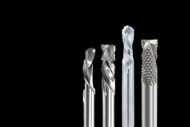
If you’re seeing fuzzy edges on the bottom of your double-sided Melamine or your team is spending hours every day with a sanding block, you don’t just have a tooling problem. You have a production bottleneck that’s eating your profits.
The game has changed as we head into 2026. Between global trade conflict and shifting export rules, buying CNC bits isn't just a quick shop errand anymore, it’s a strategic move. In today's market, the goal isn't to find the cheapest bit on the shelf; it's about figuring out your total cost-per-linear-foot and keeping your margins safe.
The 400% Surge Reality: Why Prices are Spiking
Your tool costs are tied directly to the global supply of tungsten, the heavy-duty metal used to make carbide. Right now, things are getting tight.
China controls over 75% of the world's tungsten and has started tightening the faucet on exports. Throw in new tariffs from 2025, and North American shops are feeling the pressure. By early 2026, tungsten powder prices have skyrocketed by over 200% compared to just a year ago.
For your shop, this means budget bits are a trap. To keep prices low while raw materials soar, those cheap bits are often made with lower-grade carbide that fails faster than ever.
The Cheap Bit Trap
Picking a bit based only on the price tag is a false economy. The money you save at the counter disappears the moment the tool starts underperforming.
1. The Grain Size Secret
The strength of a bit is decided at the microscopic level.
- Standard Carbide: Uses larger grains (0.8 to 1.2 microns). These bits are okay for general work, but they chip easily and dull fast.
- Sub-Micrograin Carbide: Uses tiny grains (0.6 microns or smaller). These sub-micro bits are much denser, which means they stay razor-sharp longer and don't round over as fast.
2. Avoiding The “Meltdown"
CNC cutting creates massive heat, sometimes over 1,000°C. In cheap bits, the glue (cobalt) holding the metal together can actually start to break down or evaporate. When that glue fails, the carbide grains just fall away, and your bit goes from sharp to useless in a heartbeat.
The Hidden Costs: Downtime and Re-Sanding
The gap between a budget bit and a high-performance tool is much wider than just the initial purchase price. It is measured in the thousands of dollars lost to machine downtime, ruined materials and the hidden cost of manual labor:
- The Sanding Bottleneck: Cheap bits scrape the wood instead of shearing it, leaving fuzzy edges on Baltic Birch or chips in Melamine. Manual sanding can cost a busy shop thousands of dollars a month in labor. A high-quality bit eliminates that step entirely.
- The Downtime Killer: Every time you stop the machine to swap a dull bit and reset your offsets, you’re losing 15 to 30 minutes. If you’re doing that 10 times a week because of cheap tooling, you’re tossing thousands a year into the trash in lost machine time.
Correct Bit, Correct Way, Correct Material
To get the most out of your investment, you have to match the tool geometry to what’s on the table.
Melamine & Laminates
Melamine is brittle and chips easily.
- The Move: Use a mortise compression bit. These have a very short up-cut section, which keeps the top and bottom edges clean even on thin boards.
- Pro Tip: Run higher feed rates so the bit actually cuts the glue lines rather than just rubbing against them.
Baltic Birch & Plywood
These materials are tough and full of abrasive resins.
- The Move: Look for bits with mirror-polished flutes. This smooth finish stops the sap and resin from sticking to the bit, which keeps it running cool.
Abrasive MDF
MDF is similar to cutting through sandpaper.
- The Move: Coated bits are a must. Specialized coatings act as a heat shield, protecting the bit so it lasts up to 2.5 times longer.
Why It Matters Now
In the 2026 market, high-performance carbide isn't a luxury anymore; it’s how you stay in business. The true cost of a cheap bit isn't what you spend at the counter. It’s the thousands you lose in machine downtime, ruined material, and hours spent sanding.
By switching your focus from the price of the bit to the total cost-per-part, you'll see your shop's throughput climb and your stress levels drop.
Contact our team at CleBitCo today, and we'll help you find the exact tooling you need to stop the sanding and start scaling your production.